

Get Healthy!
- Posted December 16, 2025
No Fluoride in Your Water? How to Protect Kids’ Teeth
For decades, fluoride in drinking water has helped protect kids’ teeth from cavities. But as some states move away from adding fluoride to public water, dentists say parents may need to take extra steps to keep children’s pearly whites healthy.
States such as Utah and Florida have stopped adding fluoride to public water, raising concerns among dental experts who say fluoride remains one of the safest and most effective ways to prevent tooth decay, especially in kids.
“It’s concerning, especially now that we have two states that have banned fluoride in water,” Dr. Cheen Loo, chair of pediatric dentistry at Tufts University School of Dental Medicine in Boston, said in a news release.
Fluoride works by strengthening tooth enamel and replacing minerals that are worn away by acids from food, drinks and bacteria in the mouth. Without those minerals, teeth are more likely to develop cavities.
Major medical groups, including the American Academy of Pediatrics, the American Dental Association and the American Academy of Pediatric Dentistry, continue to recommend fluoridated water as a simple, low-cost way to protect oral health.
“I think there’s still a lot of work to do to dispel the concerns that people have," Loo said.
Even without fluoride in water, children can still get protection from fluoride through other sources. These include fluoride toothpaste, mouth rinses and fluoride varnish applied by a dentist every six months.
Even before Florida and Utah’s bans, about one-third of Americans already lived in areas without fluoridated water, and dentists say they often see more tooth decay in kids from those communities.
“We tend to see more decay in patients who come from those areas,” Loo said. In those cases, dentists may recommend prescription-strength toothpaste or fluoride rinses.
Some parents choose fluoride-free toothpaste, believing it’s safer. But Loo says fluoride toothpaste does a better job protecting young teeth.
“If you use the right amount, it’s not going to cause any problems,” she said.
Dentists can show parents exactly how much toothpaste to use at different ages to avoid problems like fluorosis, which can cause faint white spots on adult teeth.
Fluoride works best when kids brush correctly. But young kids often miss areas, especially back teeth, and may not have the coordination to brush well.
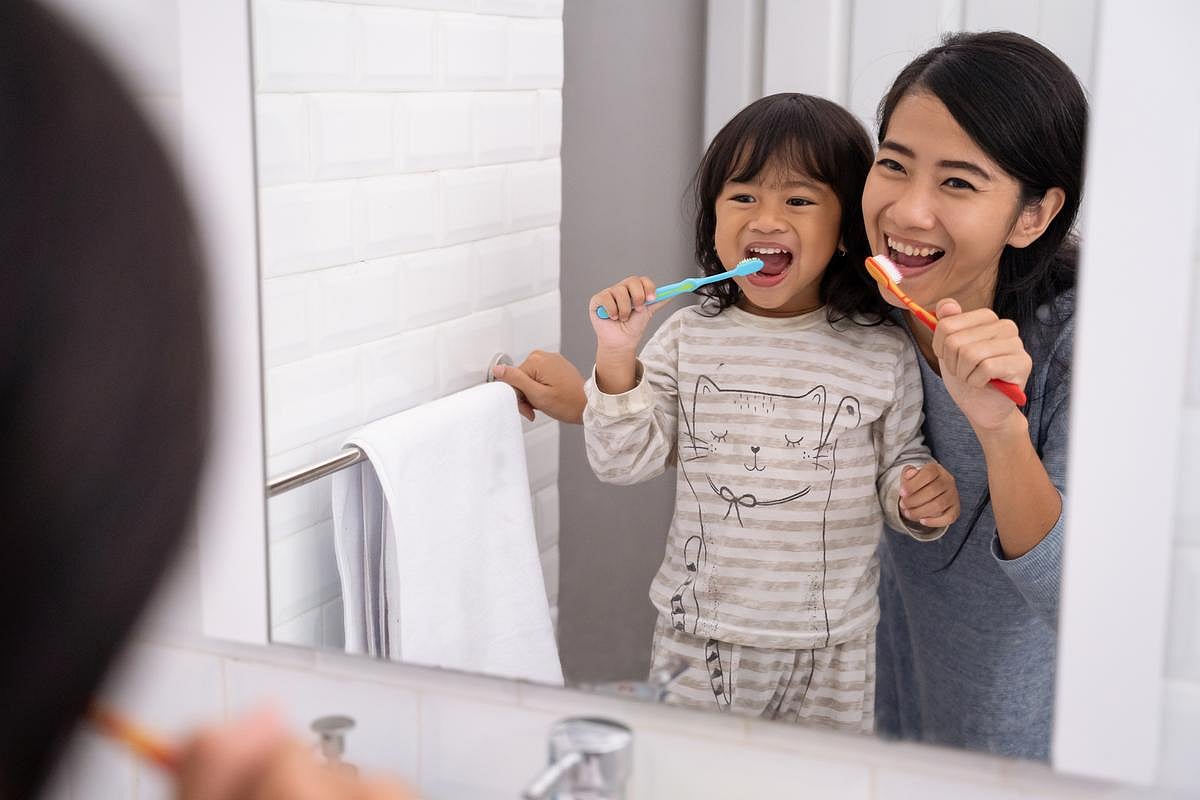
"I always tell parents it has to be supervised brushing. You can have them hold the toothbrush, play and brush a little bit, but the parent has to finish the job and make sure they get all the surfaces and all the teeth," Loo explained.
Dentists also recommend helping kids floss, since even many adults don’t do it properly.
Fluoride mouth rinses are also safe for children over age 6, who can swish and spit everything out without swallowing.
“We don’t want that to happen,” Loo said.
Dentists sometimes prescribe stronger rinses for kids with braces.
Ingestible fluoride supplements, such as drops or chewable tablets, are now used but with extra care. In October, the U.S. Food and Drug Administration (FDA) advised against giving them to children under age 3 unless they are at high risk for cavities.
Instead, many dentists now prefer professional fluoride varnish, which stays on the teeth for months at a time.
More information
Johns Hopkins Bloomberg School of Public Health has more on fluoride in water.
SOURCE: Tufts University, Dec. 12, 2025


